
Is This Call Legitimate? Five Red Flags That Should Stop You Cold
Financial fraud has become remarkably sophisticated. The messages look real, the callers sound professional, and the urgency feels completely legitimate. That's by design. Today's scams are carefully engineered to bypass your instincts and move you to action before you have a chance to think.
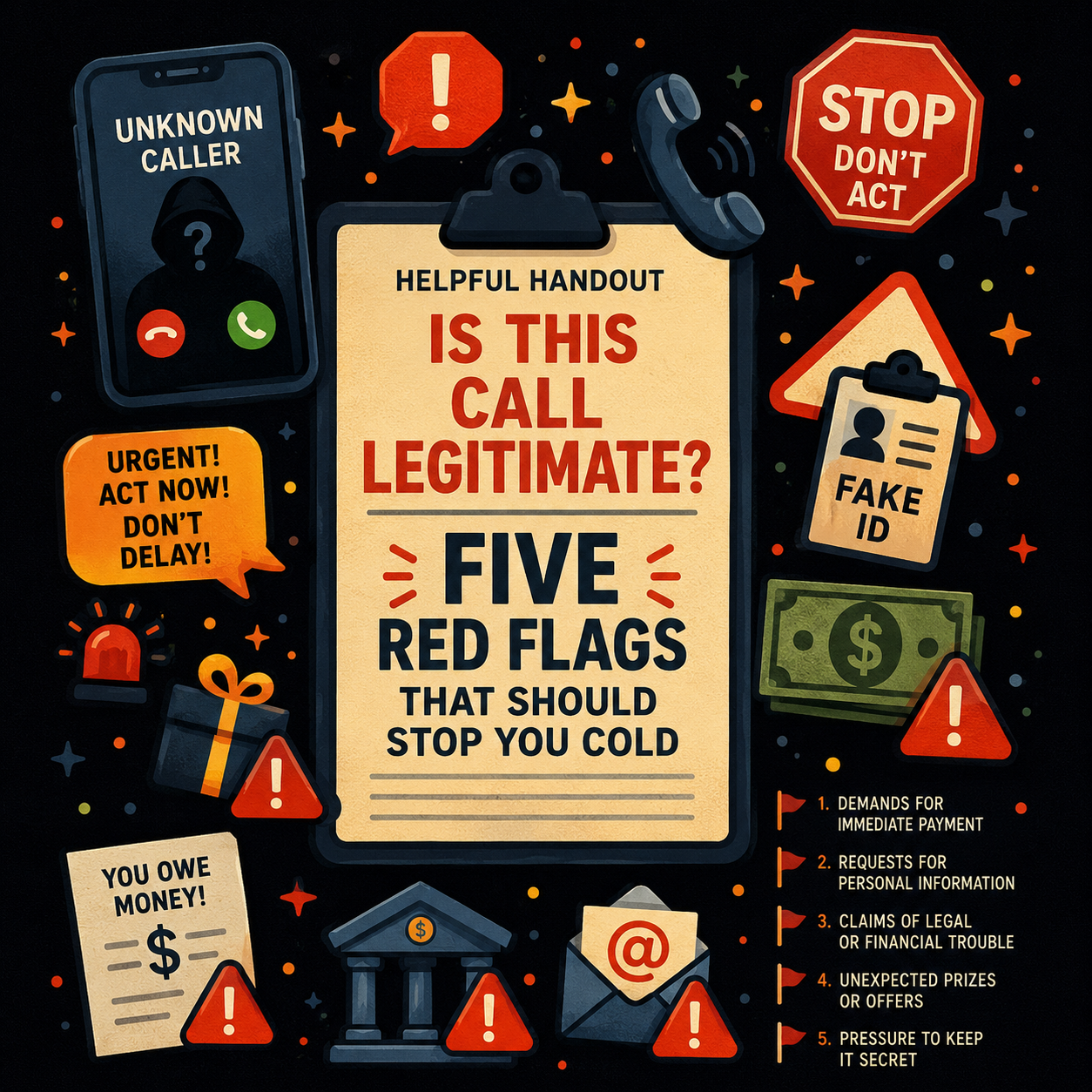
This one-page reference guide cuts through the complexity and gives you five specific warning signs — drawn from a real client experience — that should cause you to stop, hang up, and call us before taking another step.
The first red flag is one most people would miss: when a security alert tells you to call a number it provides, that number belongs to the fraudster, not your financial institution. Legitimate alerts always direct you to a number on your statement or on the institution's official website.
The second is being asked to log into your account while on the phone with someone. This is not verification. It is data capture. No legitimate financial institution will ever ask you to do this.
The third — and perhaps the most psychologically sophisticated — is being told not to contact your advisor because of an "open investigation." That instruction exists for one reason only: to isolate you long enough to complete the theft. A real investigation never requires your silence from your own advisor.
The fourth is manufactured urgency. That nervous, pressured feeling you get when someone is pushing you to act immediately? It's a tool. Fraudsters create it on purpose because fear short-circuits judgment.
The fifth is a conversation that keeps expanding — pulling in your bank, adding steps, broadening the scope. Each cooperative move builds false trust and widens their reach.
Knowing these red flags in advance is one of the most effective forms of protection available. Download this guide, keep it somewhere accessible, and share it with the people you care about.